Is Free Shipping Worth the Cost? A Shopper’s Guide
Table of Contents
- Is Free Shipping Worth the Cost? The Real Trade-Off
- Free Shipping vs Paid Shipping: What Changes at Checkout
- Shipping Costs Included in Product Price: How to Spot Them
- The Free Shipping Minimum Spend Trap
- How to Avoid Overspending for Free Delivery
- What Free Shipping Doesn’t Cover: Returns, Speed and Tax
- Conclusion: When Free Shipping Is Genuinely Worth It
- Frequently Asked Questions
Last Updated: October 12, 2026
Is Free Shipping Worth the Cost? The Real Trade-Off
Is free shipping worth the cost? For most shoppers, the honest answer is: only when the delivered price is lower than the paid-shipping alternative. That sounds obvious, but it is where most buying decisions go wrong. A free shipping offer is a pricing decision dressed up as a perk, and someone always pays for the courier.
Below, we break down when free shipping genuinely saves you money, when it quietly costs you more, and how to spot the difference before you hit checkout.
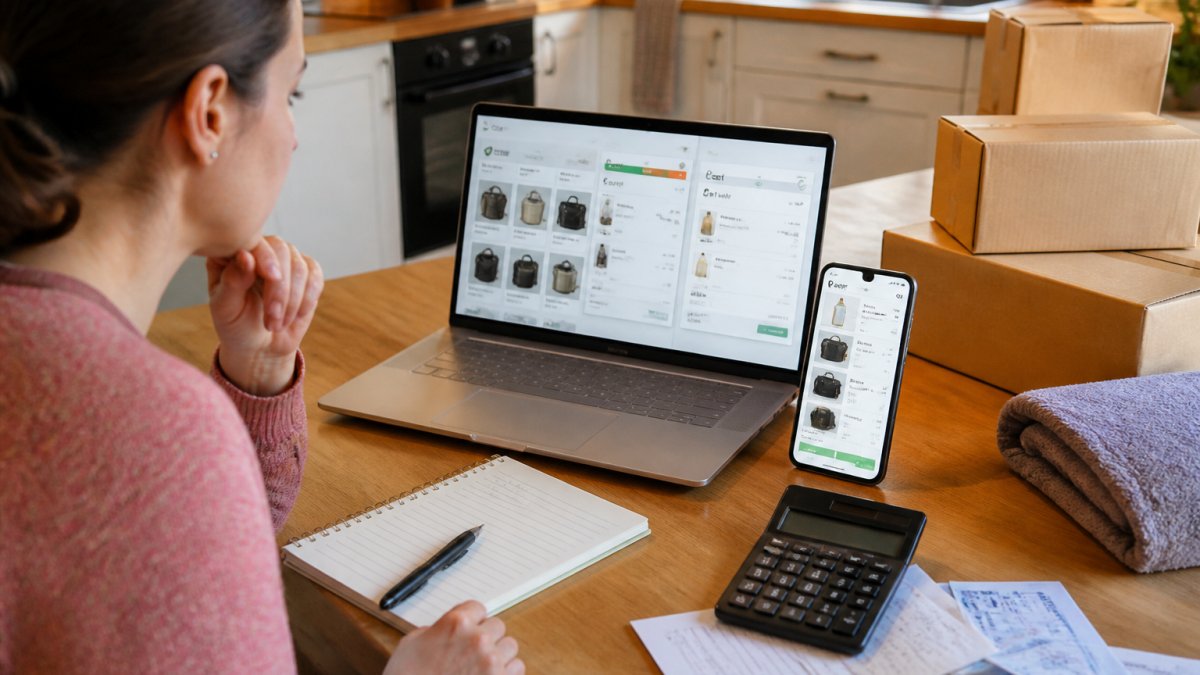
Here is the core tension in one line: free shipping is never free, it is just paid for somewhere else in the transaction.
That “somewhere else” is usually one of three places:
- A higher item price built into the listing
- A minimum spend that pushes you to buy more than you planned
- Slower or more basic delivery than a paid option would get you
The ACCC’s guidance on misleading pricing and advertising is clear that a “free” claim must not hide a cost elsewhere. That principle is a useful lens for shoppers too.
The only reliable test is the delivered price: item price plus shipping, compared against the same product elsewhere. Everything else is marketing.
Free Shipping vs Paid Shipping: What Changes at Checkout
Free shipping versus paid shipping changes three things: the total you pay, how fast the parcel arrives, and how much flexibility you keep if something goes wrong. The sticker price is only one part of that.
When a retailer offers paid shipping, the cost is visible and separate. You see exactly what delivery adds. When shipping is free, that cost has been absorbed somewhere in the business, and it usually shows up in one of these ways:
- A slightly higher item price across the board
- A minimum order value you must reach
- A slower default delivery service
- Fewer free returns or exchanges
Retailers weigh this constantly. Free delivery tends to lift conversion rates and average order value, but it also eats into profit margins. Many sellers find that a free-shipping threshold works better than unconditional free shipping, because it protects the margin while still giving shoppers a reason to add one more item.
For you as a buyer, the practical question is simple. Does the free option still leave you better off once you compare the total purchase price?
Shipping Costs Included in Product Price: How to Spot Them
Shipping costs included in product price are the hardest thing to see, because nothing on the page tells you they are there. The listing just shows one number, and delivery is “free.”
Spotting a built-in shipping cost takes a little detective work. Try these checks:
- Compare the same item across several stores and look at the delivered price, not the headline price
- Check whether a paid-shipping seller is actually cheaper once you add their fee
- Look for a “shipping and handling” line buried in the fine print
- Compare the free-shipping price against the same seller’s in-store or pickup price
A common mistake is assuming a higher price means better quality. Often it just means the courier is already baked in.
If a store’s prices are consistently higher than everyone else’s and delivery is “free,” you are likely paying for the courier through the item price. Compare the delivered total before you assume you got a deal.
The Free Shipping Minimum Spend Trap
A free shipping minimum spend is a threshold you must reach before delivery becomes free, and it is the single most effective way to make you spend more than you intended. The trap is not the threshold itself. It is what you add to cross it.
The maths rarely works in your favour. Say you need one more item to unlock free delivery. If that extra item costs more than the shipping fee would have, you have lost money, not saved it.
A quick way to test any threshold:
| Situation | Shipping fee if you stop | Extra spend to unlock free shipping | Better move |
|---|---|---|---|
| You need one small item | Modest flat fee | Higher than the fee | Pay the fee |
| You were buying the extra item anyway | Modest flat fee | Already planned | Unlock it |
| The extra item is a want, not a need | Modest flat fee | More than the fee | Skip it |
| You can combine two genuine needs | Modest flat fee | Roughly equal to the fee | Unlock it |
The rule is blunt: only chase the threshold with items you were already going to buy.
How to Avoid Overspending for Free Delivery
To avoid overspending for free delivery, work out your true break-even point before you add anything to the cart. That break-even is the point where the extra spend equals the shipping fee you are trying to dodge.
The break-even rule is simple: only add an item to unlock free delivery if it costs less than the shipping fee you would otherwise pay, and you were going to buy it anyway.
Here is a worked example. Suppose a store charges a flat $12.95 delivery fee, and free shipping kicks in at $75. Your cart currently sits at $62. You are $13 short. The tempting move is to add a $19.95 accessory to cross the line. Run the numbers:
- Stop now: $62 + $12.95 delivery = $74.95 delivered
- Top up: $62 + $19.95 + $0 delivery = $81.95 delivered
The top-up costs you $7 more than paying the fee, and you end up with an item you did not plan to buy. The threshold did its job, for the retailer.
Now reverse it. If the accessory you genuinely needed cost $9.95, the top-up total would be $71.95, which is $3 cheaper than paying the fee. That is a real saving, because the item was already on your list.
A shopper-focused break-even calculator is the fastest way to settle this at checkout. You do not need an app. Use this method:
- Write down the delivered total if you stop now: cart subtotal plus the shipping fee.
- Write down the delivered total if you top up: new subtotal plus zero shipping.
- Subtract the second from the first. If the result is positive, topping up saves you money. If it is negative, you are paying extra to feel like you got a deal.
- Ask whether the top-up item was on your list before you saw the threshold. If not, treat the saving as zero and pay the fee.
That last step is the one most people skip. A discount on something you did not need is not a saving; it is a purchase.
A practical decision tree helps here. If you need the item and it is cheaper than the fee, buy it. If you want the item and it costs more than the fee, pay the fee instead. If you do not need it at all, walk away.
Keep a running wishlist instead of topping up a single order. When a genuine need appears, you already have items ready to combine into one delivery, so the threshold works for you rather than against you. Set a reminder to review the list monthly so it does not become a graveyard of impulse adds.
One more check: confirm the threshold applies to the item subtotal, not the pre-discount total. Some stores calculate free-shipping eligibility before coupons are applied, which means a discount code can drop you back below the line after you thought you had qualified. Read the delivery terms on the checkout page, not the banner.
What Free Shipping Doesn’t Cover: Returns, Speed and Tax
Free shipping covers delivery only. It rarely covers returns, it often comes with a slower service level, and it does not change how tax applies to your order. Those three gaps are where a free offer can quietly stop being a good deal.
Returns and exchanges. Free delivery says nothing about the cost of sending something back. Some sellers cover return postage, many do not, and the difference can wipe out the saving on the original order. If return postage costs $10 and you saved $8 on delivery, you are behind before the parcel leaves your hands.
Under the Australian Consumer Law’s rules on refunds and returns, you have rights when a product is faulty, unsafe, or not as described. In those cases, the seller generally bears the cost of the remedy, including return postage. Change-of-mind returns are different: they are a store policy matter, and the policy can require you to pay postage both ways.
Delivery speed and service level. Free shipping is often the slowest option a retailer offers, and it may come with fewer carrier choices, less reliable tracking, or no signature on delivery. That matters more than most shoppers expect.
Compare the service levels, not just the price. Ask:
- Is the free option tracked end to end, or only until it leaves the warehouse?
- Is there a signature requirement, or will the parcel be left at the door?
- Which carrier handles it, and what is their typical delivery window to your area?
- If it goes missing, who is responsible for chasing it?
A free option with no tracking and no signature is a different product from a paid option with both. The saving is real, but so is the risk.
Tax treatment. In Australia, GST is generally included in the advertised price you see, so a domestic order rarely surprises you at checkout. Cross-border orders can behave differently: the goods may be subject to GST at the point of sale depending on value, and any duties or import charges sit outside the free-shipping promise. Australian Border Force guidance on importing goods explains how those charges apply.
A free-shipping offer that excludes returns, uses the slowest service level, and leaves import charges to you is not the same deal as a paid option that includes tracked delivery and a return label. Compare the full package, not the delivery line.
The full cost of an order is item price, plus shipping, plus any return postage, plus any duties, plus the value of your time if the parcel goes astray. Free delivery only touches one line of that sum. Before you treat a free offer as the better deal, check the other four.
Conclusion: When Free Shipping Is Genuinely Worth It
Free shipping is genuinely worth it when the delivered price beats the paid-shipping alternative and you were not pushed into buying more than you needed. If both of those hold, take the free option and enjoy it.
If either fails, pay the shipping fee. It is usually the cheaper call.
At Wide Bay Products, we keep this simple. We are an Australian family business, and we offer free delivery on most orders Australia wide, with competitive pricing and friendly local service. Add to cart and see the delivered total for yourself.
Frequently Asked Questions
Is it worth offering free shipping?
It depends on your margins. Free shipping can lift conversion rate and basket size, but every order you ship absorbs a real cost. The workable approach is to set a minimum order value that covers your average shipping cost plus a buffer, then track profitability per order rather than revenue alone. If the threshold pushes average order value up enough to cover fulfilment, it works.
Should you add items to your cart to qualify for free shipping?
Only if you were going to buy those items anyway. Adding a filler item to cross a free shipping minimum spend often costs more than the delivery fee you avoided. Do the maths: if shipping is a few dollars and the filler item is more than that, you have lost money. Keep a running cart total and check whether the extra item has real value to you.
How can you tell whether shipping costs are included in an item’s price?
Compare the delivered price, not the sticker price. Take the item price, add the shipping fee, and compare that total across sellers. If one retailer charges more upfront but ships free, and another charges less but adds a fee, the cheaper-looking listing may not be cheaper once delivered. Check the shipping policy page for thresholds and exclusions before you commit.
Does free shipping really save you money?
Sometimes. Free shipping saves money when you would have bought the item regardless and the seller’s delivered price is lower than the alternative. It costs you money when you inflate your basket to hit a free shipping minimum spend, or when the free option comes with slower delivery or stricter returns. Compare total purchase price, delivery speed and return terms together before deciding.